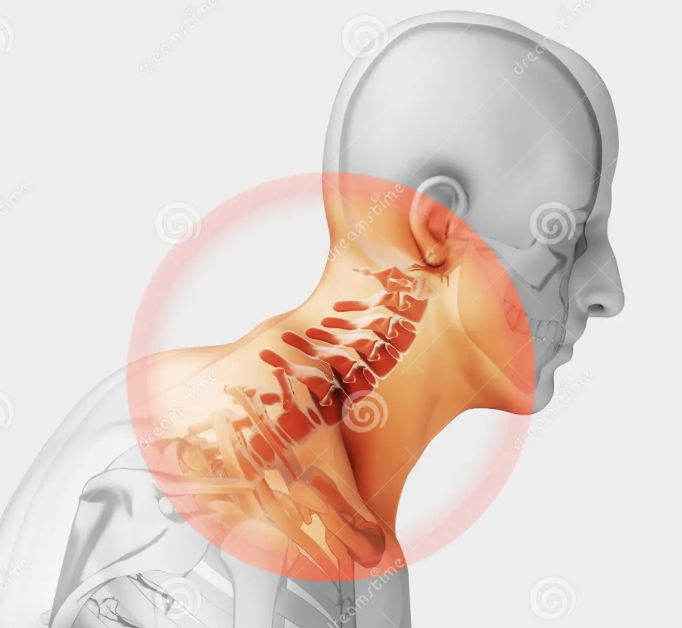
Neurology Pain Science (10 min read)
The Neck Behind the Pain: Cervicogenic Involvement in Migraines & Headaches
When a headache originates not in the brain, but in the bones, joints, and muscles of the cervical spine — and why that changes everything about treatment.
Clinical Health Blog
March 2026 · For patients & practitioners
Millions of people live with chronic headaches, cycling through medications and diagnoses without ever addressing a surprisingly common root cause: the cervical spine. The relationship between the neck and the head is intimate — anatomically, neurologically, and clinically — yet cervicogenic contributions to headache are routinely overlooked, misdiagnosed as tension-type headaches or even migraines, and undertreated as a result.
This article explores the anatomy of that connection, how cervicogenic headaches present, how they differ from — and interact with — migraine, and what evidence-based approaches now exist to address them.
What Is a Cervicogenic Headache?
A cervicogenic headache (CGH) is a secondary headache disorder: one in which the pain is referred from a structural source in the neck. Unlike primary headaches (migraine, tension-type, cluster), cervicogenic headache has an identifiable musculoskeletal origin — typically the upper cervical spine at the C1–C3 levels.
"The pain is in the head. The problem is in the neck."
This distinction matters enormously for treatment. Targeting the cervical source can dramatically reduce or eliminate headache frequency in affected patients — something no migraine-specific medication can achieve if the underlying driver is mechanical.
The Anatomy of the Connection
Understanding cervicogenic headache requires understanding the trigeminocervical nucleus — the neural hub where it all converges. The trigeminal nerve, which carries sensory information from the face and head, converges at the trigeminal nucleus caudalis in the brainstem, which extends down into the dorsal horn of the upper cervical spinal cord (C1–C3).
Cervical structures involved
- C1–C3 facet joints
- Atlantoaxial joint (C1/C2)
- Suboccipital muscles
- Upper cervical dura mater
- Cervical intervertebral discs
- Greater occipital nerve
Neurological pathways
- Trigeminocervical nucleus
- Dorsal root ganglia C1–C3
- Trigeminal nucleus caudalis
- Spinal trigeminal tract
- Thalamic relay neurons
- Cortical pain processing
When nociceptive signals from the upper cervical joints, muscles, or dura converge with trigeminal inputs, the brain can misinterpret the origin of the pain. This is referred pain — the same mechanism that causes left arm pain during a heart attack. The result is perceived head pain generated by a cervical source.
How Cervicogenic Headache Presents
The International Headache Society's diagnostic criteria for cervicogenic headache specify that clinical, laboratory, or imaging evidence must confirm a disorder or lesion within the cervical spine known to cause headache, but in practice, the clinical picture is often the most useful starting point.
Common clinical features
Unilateral head/neck pain
Pain triggered by neck movement
Restricted cervical range of motion
Onset from occipital region
Tenderness at C2–C3 on palpation
Relief with diagnostic nerve block
Ipsilateral shoulder/arm pain
Nausea (in some cases)
Crucially, the pain typically begins in the neck and radiates forward toward the forehead, eye, or temple — though the patient may report the headache predominantly in these frontal locations, obscuring the cervical origin. A careful history — particularly asking whether neck posture or movement worsens the pain — is essential.
The Overlap with Migraine
Here the picture becomes genuinely complex. Cervicogenic headache and migraine are not mutually exclusive, and their overlap creates diagnostic and therapeutic challenges that remain at the forefront of headache medicine.
Several mechanisms explain the relationship. First, the trigeminocervical nucleus is implicated in both conditions — meaning that cervical sensitisation can lower the threshold for migraine activation in susceptible individuals. A painful cervical joint may effectively "prime" the trigeminocervical system, making a full migraine attack more likely.
Cervical dysfunction may not just mimic migraine — it may help trigger it.
Secondly, migraine itself causes peripheral and central sensitisation. During and after an attack, the neck muscles become hypersensitive and tender — a phenomenon known as allodynia extending to the neck. This can cause neck pain that patients (and clinicians) may mistake for the cause of the migraine rather than its consequence.
Third, a growing body of evidence suggests that many patients diagnosed with chronic migraine have significant, undertreated cervical pathology. When that pathology is addressed — through physiotherapy, manual therapy, or injection-based interventions — migraine frequency often decreases substantially.
Diagnosis: Separating Signal from Noise
No single imaging study reliably diagnoses cervicogenic headache. Degenerative changes are common in asymptomatic populations, so radiological findings must always be interpreted in clinical context. MRI of the upper cervical spine can identify structural pathology, but the gold standard for confirmation remains a diagnostic nerve block.
Selective anaesthetic block of the C2 or C3 dorsal rami — or of the greater occipital nerve — can temporarily abolish pain in a true cervicogenic headache. If a patient achieves >80% pain relief following a properly performed diagnostic block, cervicogenic headache is confirmed by IHS criteria. This has both diagnostic and therapeutic implications.
Physiotherapy assessment is equally valuable. The Flexion-Rotation Test (FRT), which evaluates C1/C2 rotation, has strong sensitivity and specificity for upper cervical dysfunction in headache patients and is simple to perform in clinic.
Treatment Approaches
The evidence base for cervicogenic headache treatment has matured considerably in the past decade. A multimodal approach — combining manual therapy, exercise, and where necessary, injection-based intervention — produces the best outcomes.
First-line
Manual therapy & physiotherapy
Upper cervical joint mobilisation/manipulation, combined with deep cervical flexor training (Jull et al.) has the strongest evidence base. Targets the mechanical source directly.
Adjunct
Dry needling & trigger point therapy
Addresses myofascial components in suboccipital, upper trapezius, and sternocleidomastoid muscles. Particularly useful when muscular hypertonicity is prominent.
Interventional
Nerve blocks & radiofrequency ablation
Greater occipital nerve blocks and C2/C3 medial branch blocks offer both diagnostic confirmation and therapeutic benefit. Radiofrequency ablation provides longer-lasting relief for confirmed facet-mediated pain.
Supportive
Posture, ergonomics & load management
Forward head posture increases compressive load on upper cervical joints. Workstation optimisation, postural retraining, and sleep position advice address modifiable perpetuating factors.
When Migraine and Cervicogenic Headache Coexist
Managing comorbid migraine and cervicogenic headache requires a clear treatment hierarchy. Acute migraine medications (triptans, gepants) remain appropriate for managing migraine attacks, but if cervical dysfunction is present and untreated, preventive pharmacotherapy will have limited effect on headache frequency.
The pragmatic approach is to treat the cervical component first — ideally with a structured course of physiotherapy — and reassess. Patients often experience a meaningful reduction in both headache frequency and severity. Those who continue to meet criteria for migraine prevention despite cervical treatment can then be considered for CGRP-targeted therapies or other preventive agents.
Botulinum toxin injections (used in chronic migraine) are sometimes extended to include cervical and suboccipital muscles — an approach supported by clinical experience and some evidence, and which reflects the overlapping neuroanatomy of the two conditions.
A Note on the Clinical Blind Spot
One of the most consistent findings in the literature is that cervicogenic headache remains substantially underdiagnosed. Studies suggest that among patients presenting to headache clinics with a diagnosis of migraine, a meaningful proportion have unrecognised cervical pathology as a primary or contributing driver. The neck examination is often omitted in neurology-led headache consultations; the headache history is often absent in physiotherapy-led neck assessments.
Closing this diagnostic gap requires collaboration between neurology, pain medicine, and musculoskeletal physiotherapy — and a willingness among clinicians in all three disciplines to consider the cervical spine as a potentially treatable contributor to what is presenting as a "headache problem."
Clinical takeaway: In any patient with chronic or recurrent headache, particularly with occipital onset, unilaterality, or worsening with neck movement, a structured cervical spine assessment is warranted. The neck is not incidental — in many cases, it is the diagnosis. Addressing it can be transformative.